

Responsible Transformation: A Playbook for Fast, Low-Risk Change in 2026
For years, the conventional wisdom around business transformation has been straightforward: you can move fast or you can move safely, but you can’t do both. That framing is outdated.
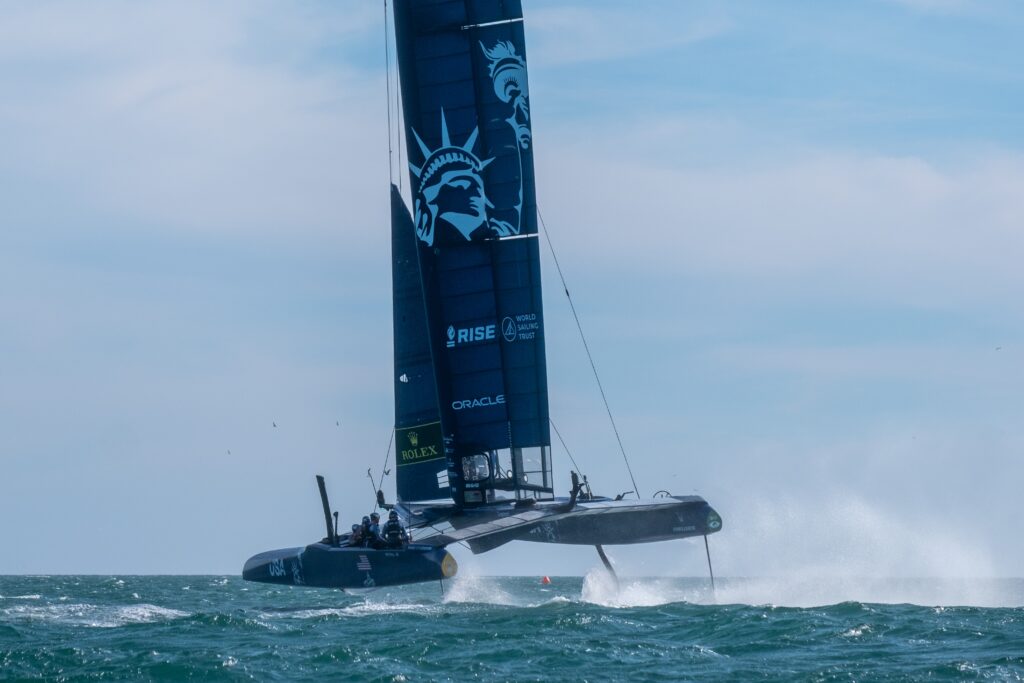
“The speed-versus-risk tradeoff doesn’t hold anymore,” says Matthew Gantner, Founder and CEO of Altum Strategy Group. “Think about elite sailing crews. You don’t win a race by dropping anchor every time the wind shifts. You win by reading the conditions in real time, trimming the sails, and adjusting course without losing speed. That’s what transformation looks like in 2026 — you have to be fast and precise at the same time.”
The economic, regulatory, and technological environment has shifted to a point where responsible transformation — an approach Altum has been refining since its founding in 2019 — is no longer a philosophical preference. It’s an operational necessity.
Matching the vehicle to the road
Responsible transformation is not caution for caution’s sake. The approach is pragmatic and stepped. Companies facing capital constraints and liquidity pressures can’t afford to pursue transformation as a single, sprawling initiative. They need to sequence deliberately — solving specific problems while building toward a longer-term architecture.
“If you need to get across town, you don’t necessarily need an F1 car. A sedan might be exactly the right vehicle,” Gantner explains. “But if the terrain gets rougher and more complex — and it is getting rougher — you’re going to need something more like an SUV. The point is to match your approach to the actual conditions, not to the conditions you wish you had.”
That matching process starts with a holistic view of the enterprise. Before a CEO invests in any new system or capability, they need to understand how their people, processes, and technology are actually connected — or, more often, where the connections are broken. Only then can you sequence changes in a way that builds momentum without introducing unnecessary risk.
The 90-day question
When pressed on what a CEO with a 90-day window should do to demonstrate meaningful board-level progress, Gantner’s answer is structured but not rigid. First, assess the current state of the business — not just the technology stack, but the organizational structure and the processes that link the two. Second, map the changes needed across people, process, and technology, and sequence them based on where the highest-impact, lowest-risk moves sit. Third, secure a trusted partner to execute alongside your team, and build in measurable checkpoints and proactive governance from day one.
The discipline required is real. Gantner points to a client engagement where a company moved from spreadsheet-driven operations to a fully integrated finance and operations platform through a deliberate three-phase approach. Each phase was scoped as a smaller, achievable project — clear executive oversight, defined success criteria, and lessons from earlier phases carried forward into the next. The early wins built credibility with the executive team and board, which in turn unlocked the cultural buy-in needed for the more ambitious phases that followed.
“By the time we got to phase three, the accounting, data, and operations teams were fully on board,” Gantner recalls. “That didn’t happen by accident. It happened because we broke the transformation into pieces that people could see, touch, and believe in.”
The people variable — and the AI question
This gets at what is perhaps the most underappreciated factor in any transformation: people. Change management has to start at the top and be transparent about what the journey looks like for everyone involved. When companies are vague about roles, timelines, and the impact of new systems on day-to-day work, anxiety fills the vacuum — and productivity drops before the transformation even begins.
AI makes this dynamic more acute. AI can serve as a genuine accelerant — Altum launched its own AI Lab, Poseidon, to operationalize responsible AI practices for clients. “Deploying without guardrails carries real consequences,” Gantner says. “AI can compress timelines and surface insights that would take a team weeks to produce manually. But if you don’t have governance and human oversight built in from the start, you’re not accelerating transformation. You’re accelerating risk.”
The same principle applies to technology selection more broadly. Too many transformation failures stem from companies choosing software based on cost rather than on whether it meets business needs and fits the culture. Getting the sequence wrong — leading with price instead of purpose — is one of the most reliable ways to turn a low-risk initiative into an expensive one.
Stepping back to move forward
Gantner’s counsel to leaders is perhaps the most counterintuitive of all: slow down your thinking, even as you speed up your execution. He advocates for quarterly strategic pauses — structured moments where leadership teams step back from immediate market pressures and ask whether their transformation trajectory still aligns with where the business needs to be in three to five years.
“The leaders who get this right aren’t the ones moving fastest,” Gantner says. “They’re the ones who know exactly why they’re moving — and where they’re going.”
For more insights on responsible transformation, visit altumstrategy.
- Date May 3, 2026
- Tags Insights, Strategic Growth & Digital Transformation Insights